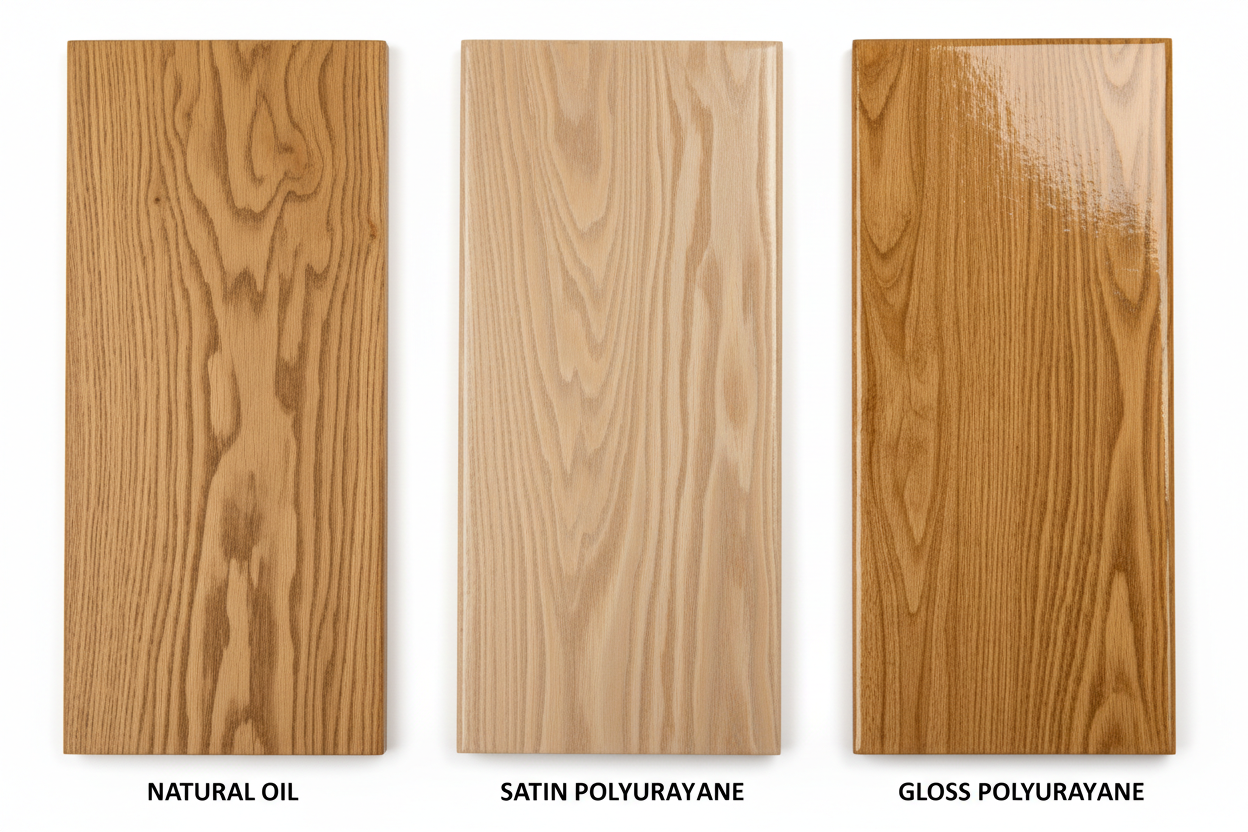
Table of Contents Why the Right Wood Finish Matters The Main Types of Wood Finish Explained Osmo Hardwax Oil: The Professional's Choice Rubio Monocoat: One Coat Wonder Traditional Finishes: Varnish, Lacquer & Danish Oil Full Comparison Table 10 Expert Tips for Finishing Oak Key Facts at a Glance Frequently Asked Questions Related Articles Why the Right Wood Finish Matters Oak is one of the most beautiful and durable hardwoods available — but without the right finish, it's vulnerable to moisture, staining, UV fading, and everyday wear. The finish you choose doesn't just protect the wood; it fundamentally changes how it looks, feels, and ages over time. Get it right and your oak furniture or flooring will improve with every passing year. Get it wrong and you'll be sanding back and starting over within a few seasons. The UK wood finishing market has evolved significantly over the past decade. Traditional solvent-based varnishes and lacquers are increasingly being replaced by penetrating hardwax oils — products like Osmo and Rubio Monocoat that work with the wood rather than sitting on top of it. Understanding the difference is the first step to making the right choice. Fact: According to the Wood Protection Association, improperly finished hardwood furniture loses up to 60% of its lifespan compared to correctly finished equivalents. The finish is not optional — it's essential. The Main Types of Wood Finish Explained Before comparing specific products, it helps to understand the two fundamental categories of wood finish: Film-forming finishes (varnish, lacquer, polyurethane) — these sit on top of the wood, creating a protective layer. They offer high gloss and strong surface protection but can peel, crack, and are difficult to repair without stripping the entire surface. Penetrating finishes (hardwax oils, Danish oil, tung oil) — these soak into the wood fibres, hardening from within. They enhance the natural grain, are easy to spot-repair, and give a more natural, matte appearance. They require periodic reapplication but never peel or crack. For solid oak furniture and flooring, penetrating finishes are almost always the preferred choice among professional woodworkers and interior designers. They allow the wood to breathe, move naturally with humidity changes, and develop a beautiful patina over time. Osmo Hardwax Oil: The Professional's Choice Osmo Hardwax Oil is a German-engineered penetrating finish made from natural plant oils (sunflower, soybean, thistle) and plant waxes (carnauba and candelilla). It has been the go-to choice for professional woodworkers and interior designers across Europe for over 40 years. Coverage: 1 litre covers approximately 15–25m² (two coats) Drying time: 8–10 hours between coats; fully cured in 7 days Coats required: 2 (first coat thinned 10% with Osmo Brush Cleaner) Finish options: Matte, satin, semi-gloss, and clear Repairability: Excellent — spot repair without full refinishing VOC content: Low (compliant with EU Directive 2004/42/EC) Water resistance: Very high — water beads on the surface Best for: Floors, furniture, worktops, and high-traffic surfaces Osmo is particularly well-suited to oak because it enhances the wood's natural golden tones without yellowing over time. It's also one of the most durable penetrating finishes available, with independent testing showing it outperforms many film-forming finishes in abrasion resistance. Rubio Monocoat: One Coat Wonder Rubio Monocoat is a Belgian innovation that uses a patented Reaction Technology — the oil molecules bond directly to the wood fibres on a molecular level, meaning only one coat is ever needed. Any additional coats simply wipe off without bonding, making it virtually impossible to over-apply. Coverage: 1 litre covers approximately 20–40m² (one coat) Drying time: Wipe off excess after 10–15 minutes; fully cured in 5–7 days Coats required: 1 (the defining feature of the product) Finish options: Over 50 colours plus natural/clear Repairability: Excellent — seamless spot repair VOC content: Zero VOC — the lowest of any wood finish on the market Water resistance: High Best for: Furniture, joinery, interior woodwork, and colour-tinted finishes Rubio Monocoat is the preferred choice when zero VOC content is a priority — ideal for nurseries, bedrooms, and spaces where air quality is a concern. Its colour range is also unmatched, making it popular with interior designers who want to tint oak without obscuring the grain. Traditional Finishes: Varnish, Lacquer & Danish Oil Traditional finishes still have their place, particularly for specific applications or budget-conscious projects. Polyurethane varnish — highly durable film-forming finish. Excellent for floors and worktops but prone to peeling over time and difficult to repair. Drying time: 4–6 hours per coat; 3–4 coats required. Lacquer — fast-drying film-forming finish popular in commercial furniture production. Very hard surface but brittle and prone to cracking. Typically spray-applied. Danish oil — a penetrating oil blend (usually tung oil and varnish) that's easy to apply but offers less protection than Osmo or Rubio. Requires more frequent reapplication (every 1–2 years). Good for indoor furniture with light use. Hardwax oil (generic) — similar to Osmo but from various manufacturers. Quality varies significantly; always check independent test data before choosing a lesser-known brand. Full Comparison Table Feature Osmo Hardwax Oil Rubio Monocoat Polyurethane Varnish Danish Oil Type Penetrating Penetrating Film-forming Penetrating Coats needed 2 1 3–4 3–4 Drying time (per coat) 8–10 hrs Wipe off in 15 min 4–6 hrs 4–6 hrs Full cure time 7 days 5–7 days 7–14 days 7 days VOC content Low Zero High Medium Spot repairable Yes Yes No Partial Peels/cracks Never Never Yes (over time) Rarely Colour options Limited 50+ Clear only Clear/tinted Best for Floors, worktops, furniture Furniture, joinery, colour work High-traffic floors Light-use indoor furniture Approx. cost (1L) £35–45 £45–60 £15–25 £10–20 10 Expert Tips for Finishing Oak 1. Always Sand to the Correct Grit First The finish is only as good as the surface beneath it. For penetrating oils, sand to 120–150 grit — no finer. Counter-intuitively, sanding too fine (180+ grit) closes the wood pores and prevents the oil from penetrating properly. For film-forming finishes, sand to 180–240 grit for a smooth base. 2. Remove All Dust Before Applying Dust contamination is the most common cause of a poor finish. After sanding, vacuum thoroughly, then wipe down with a tack cloth or a lint-free cloth dampened with white spirit. Allow to dry completely before applying any finish. 3. Apply Osmo Thinly — Less is More The most common mistake with Osmo Hardwax Oil is applying it too thickly. A thin coat that penetrates fully outperforms a thick coat that sits on the surface and takes days to dry. Apply with a flat brush or Osmo applicator pad, working with the grain, and wipe off any excess after 30 minutes. 4. Test Your Finish on a Scrap Piece First Oak reacts differently to finishes depending on its tannin content, cut (flat-sawn vs quarter-sawn), and age. Always test on an offcut or hidden area first. This is especially important with Rubio Monocoat colour tints, which can look very different on fresh oak vs aged oak. 5. Consider the End Use Before Choosing A dining table that sees daily use needs a more durable finish than a decorative shelf. For high-traffic surfaces (floors, worktops, dining tables), Osmo Hardwax Oil is the stronger performer. For decorative joinery and furniture where zero VOC is a priority, Rubio Monocoat is the better choice. 6. Allow Full Cure Time Before Heavy Use Both Osmo and Rubio feel dry to the touch within 24 hours, but full cure takes 5–7 days. During this period, avoid placing heavy objects on the surface, using harsh cleaning products, or exposing the wood to excessive moisture. Patience here pays dividends for years to come. 7. Use the Right Applicator for Each Product Osmo works best with a flat brush or Osmo pad — avoid rollers, which introduce air bubbles. Rubio Monocoat is best applied with a white 3M pad in circular motions, then wiped off with a clean lint-free cloth. Using the wrong applicator is one of the most common causes of uneven results. 8. Maintain Regularly to Extend Lifespan Penetrating finishes require periodic maintenance to stay in top condition. For Osmo, apply a maintenance coat of Osmo Polyx Oil Refresh every 1–2 years depending on use. For Rubio, use Rubio Monocoat Soap for regular cleaning and Refresh Eco for annual maintenance. This is far simpler than stripping and refinishing a film-forming finish. 9. Never Mix Finish Types on the Same Surface Applying a penetrating oil over a film-forming finish (or vice versa) will result in adhesion failure. If you're refinishing existing oak, identify the current finish first. If it's a film-forming finish, it must be fully stripped before applying a penetrating oil. Use a small amount of white spirit on a cloth — if the finish softens, it's likely an oil; if it doesn't, it's a film-forming finish. 10. Store Oily Rags Safely This is a critical safety point that is often overlooked. Rags soaked in drying oils (including Osmo and Danish oil) can spontaneously combust if left bunched up. After use, spread rags flat outdoors to dry completely, or submerge them in water in a sealed metal container before disposal. This is not optional — it's a fire safety requirement. Key Facts at a Glance Improperly finished hardwood loses up to 60% of its lifespan (Wood Protection Association) Osmo Hardwax Oil has been used by professionals for over 40 years Rubio Monocoat has zero VOC content — the lowest of any wood finish Penetrating finishes never peel or crack; film-forming finishes can over time Osmo covers 15–25m² per litre (2 coats); Rubio covers 20–40m² per litre (1 coat) Full cure time for both Osmo and Rubio is 5–7 days Sanding too fine (180+ grit) prevents penetrating oils from absorbing properly Oily rags can spontaneously combust — always dry flat or submerge in water before disposal Frequently Asked Questions What is the best wood finish for oak furniture? For most solid oak furniture, a penetrating hardwax oil — either Osmo or Rubio Monocoat — is the best choice. Both enhance the natural grain, are easy to maintain, and never peel or crack. Osmo offers slightly better durability for high-traffic surfaces; Rubio is preferred when zero VOC content is a priority or when colour tinting is required. How often do I need to reapply wood finish to oak? With Osmo or Rubio Monocoat, a maintenance coat is typically needed every 1–2 years for furniture and every 3–5 years for lightly used surfaces. Regular cleaning with the manufacturer's recommended soap will extend the time between maintenance coats significantly. Can I use Osmo over existing varnish? No — Osmo and other penetrating oils cannot bond to a film-forming finish. The existing varnish must be fully stripped (sanded back to bare wood) before applying Osmo. Attempting to apply over varnish will result in the oil sitting on the surface and never drying properly. Is Rubio Monocoat really one coat? Yes — due to its patented Reaction Technology, Rubio Monocoat bonds to the wood fibres on a molecular level. Only one coat is needed; any additional product simply wipes off without bonding. This makes it virtually impossible to over-apply and significantly reduces application time. What wood finish is safe for a child's bedroom or nursery? Rubio Monocoat is the safest choice, with zero VOC content and full certification for use in children's environments. Once fully cured (5–7 days), both Osmo and Rubio are considered safe, but Rubio's zero VOC formulation makes it the preferred option during and immediately after application. Related Articles Comparing Premium Wood Finishes: Osmo vs Rubio vs Traditional Options Osmo Hardwax Oil: The Complete Guide to Our Premium Wood Finish of Choice Rubio Monocoat: The Single-Coat Wonder for Natural Wood Finishes The Complete Guide to Choosing Hardwoods for Your Home: Oak, Walnut, and Ash Compared How to Care for Hardwood Furniture: When and Why to Reapply Wood Finish
Leave a comment
This site is protected by hCaptcha and the hCaptcha Privacy Policy and Terms of Service apply.